
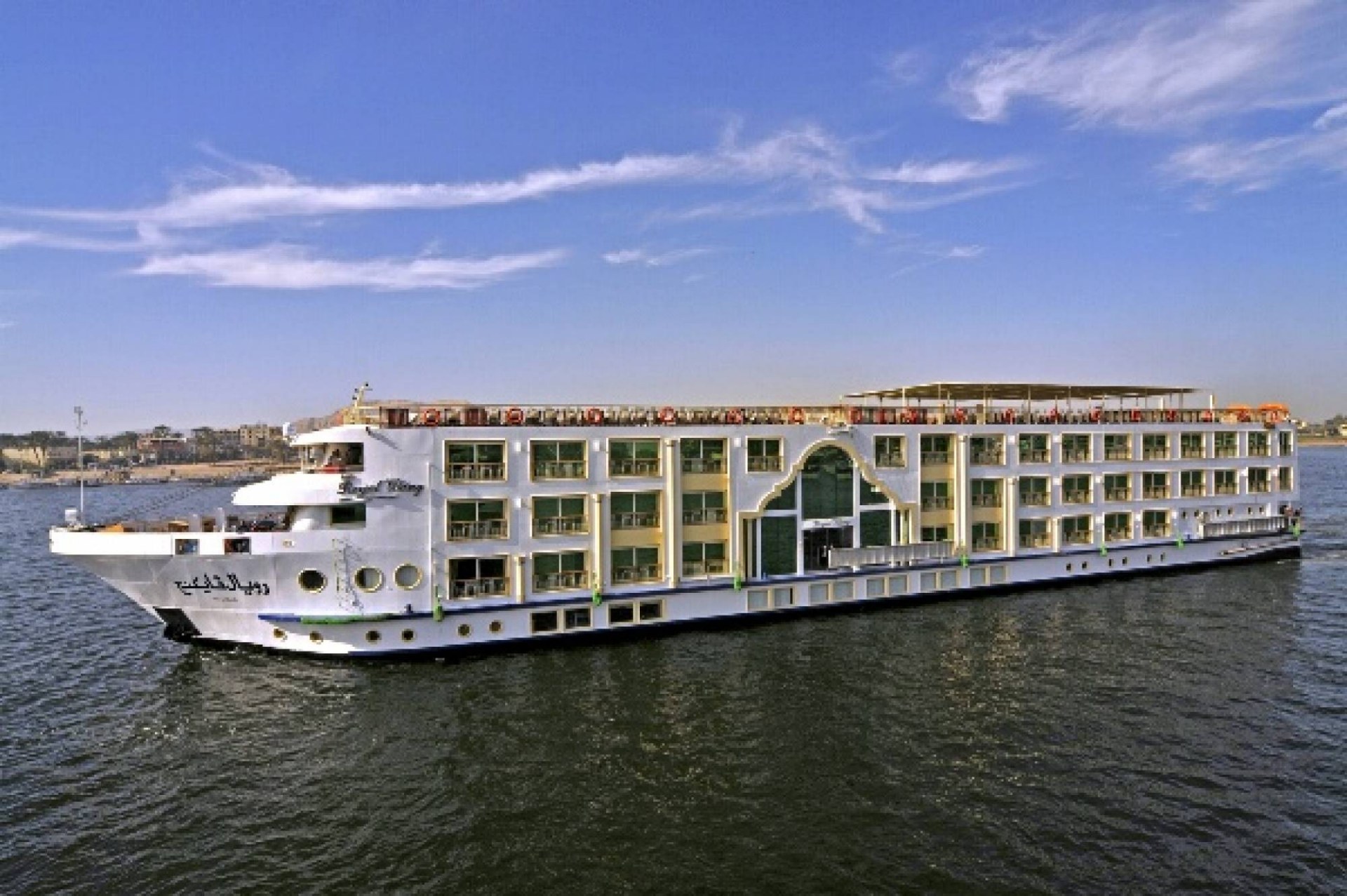
For the ancient Egyptians the Nile was everything: water, food, the calendar and the main road of the country. Gods travelled on it in sacred boats, and kings shipped obelisks and statues along it. That is why a Nile cruise is still the best way to understand Egypt. Between Luxor and Aswan, the river links many of the most important temples in a natural sequence, and you unpack only once. Here is a classic Nile cruise itinerary, stop by stop.
At a glance
- Classic route: Luxor ↔ Aswan, about 200 km of river
- Cruise lengths: 3 nights (Aswan to Luxor), 4 nights (Luxor to Aswan), 7 nights round trip
- Main stops: Luxor, Esna, Edfu, Kom Ombo, Aswan
- Smaller boats: dahabiyas: traditional sailing boats for a few guests
- Best season: October to April
The river as ancient Egypt’s highway
Almost all of Egypt’s population lived along the narrow green ribbon of the Nile. The river flows north, while the prevailing wind blows from the north, so boats could drift downstream with the current and sail upstream with the wind – the perfect two-way highway. Stone from the quarries of Aswan and Gebel el-Silsila was floated to building sites, and festival processions carried statues of the gods by boat between temples. Following the river today, you follow the routes of the ancient Egyptians themselves.
Luxor: the great temples and the royal tombs
Most cruises begin or end in Luxor, ancient Thebes. On the East Bank you will visit Karnak and Luxor Temple; on the West Bank, the Valley of the Kings, the Temple of Hatshepsut and the Colossi of Memnon. Read our guide to Luxor’s East and West Bank for more.
Esna: colours rediscovered
Next, sailing south, boats pass through the lock at Esna. Its Temple of Khnum, a Roman-period hall now in the middle of the town, has recently been cleaned by Egyptian and German conservators, revealing ceilings and columns of astonishingly bright colour hidden for centuries under soot and dirt. Not every itinerary stops here, so ask if it is included.
Plan your visit
Choose a classic cruise, a dahabiya or a full Egypt package that combines Cairo with the Nile.
Edfu: the best-preserved temple in Egypt
The Temple of Horus at Edfu, built under the Ptolemies between 237 and 57 BC, is the most complete temple from ancient Egypt. Its towering entrance pylon, courtyard, halls and sanctuary are all intact, along with the roof. Its walls record myths, rituals and even the temple’s own building history, making it the best place to understand how an Egyptian temple worked.
Kom Ombo: a temple for two gods
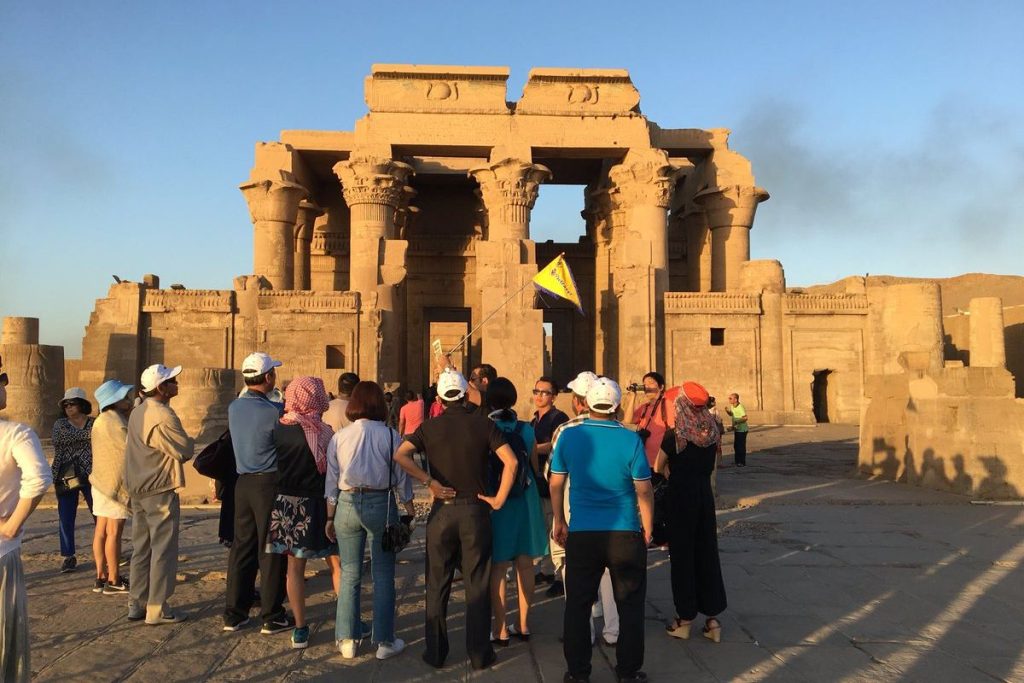
Further south, set on a bend of the river, Kom Ombo is unusual: a double temple, with two parallel entrances and sanctuaries dedicated to the crocodile god Sobek and the falcon god Haroeris (Horus the Elder). Look for the reliefs of medical instruments and the ancient calendar, and visit the small Crocodile Museum with mummified crocodiles from the local cemetery. Kom Ombo is especially beautiful at sunset and floodlit after dark.
Aswan: granite, islands and Philae
Finally, the cruise ends or begins in Aswan, where the scenery changes to granite boulders, golden dunes and Nubian villages. Highlights include the temple of Isis at Philae, the Unfinished Obelisk, the High Dam and a felucca sail around Elephantine Island. From Aswan you can continue to Abu Simbel. See our guide to Aswan and Nubian culture.
Choosing your Nile cruise itinerary
- 4 nights Luxor to Aswan – the most relaxed option, with time on both banks of Luxor before sailing.
- 3 nights Aswan to Luxor – shorter, sailing with the current.
- 7 nights round trip – the full experience at a slower pace.
- Dahabiya – a traditional two-masted sailing boat carrying a small number of guests. Dahabiyas moor at quiet riverbanks and often visit smaller sites such as Gebel el-Silsila, for a more intimate trip.
- Lake Nasser cruises – for travellers wanting to see the remote Nubian temples, ending at Abu Simbel.
The most comfortable season is October to April. Summer cruises are cheaper but very hot in the middle of the day; sightseeing is then done early in the morning and late in the afternoon.
Frequently asked questions
How many nights should a Nile cruise be?
Four nights from Luxor to Aswan is the most popular choice. Three nights is fine if time is short; seven nights gives a slower, fuller experience.
What sites are included on a Nile cruise?
Usually Karnak, Luxor Temple and the Valley of the Kings in Luxor, the temples of Edfu and Kom Ombo, and Philae, the Unfinished Obelisk and the High Dam in Aswan. Abu Simbel is usually an optional extra.
What is a dahabiya?
A traditional Nile sailing boat with two masts and a small number of cabins, offering a quieter, more personal cruise with stops at less-visited sites.
When is the best time for a Nile cruise?
October to April, when the weather is warm and sunny but not too hot.
Sources & further reading
- UNESCO World Heritage – Ancient Thebes with its Necropolis
- UNESCO World Heritage – Nubian Monuments from Abu Simbel to Philae
- Theban Mapping Project
Written by the Deluxe Travel Egypt team and checked against the published sources above. Last updated October 2026.
Find your perfect Nile cruise
Tell us your dates and style and we will recommend the right ship or dahabiya.
Send an enquiry WhatsApp +201000569259 WhatsApp +201221418581