
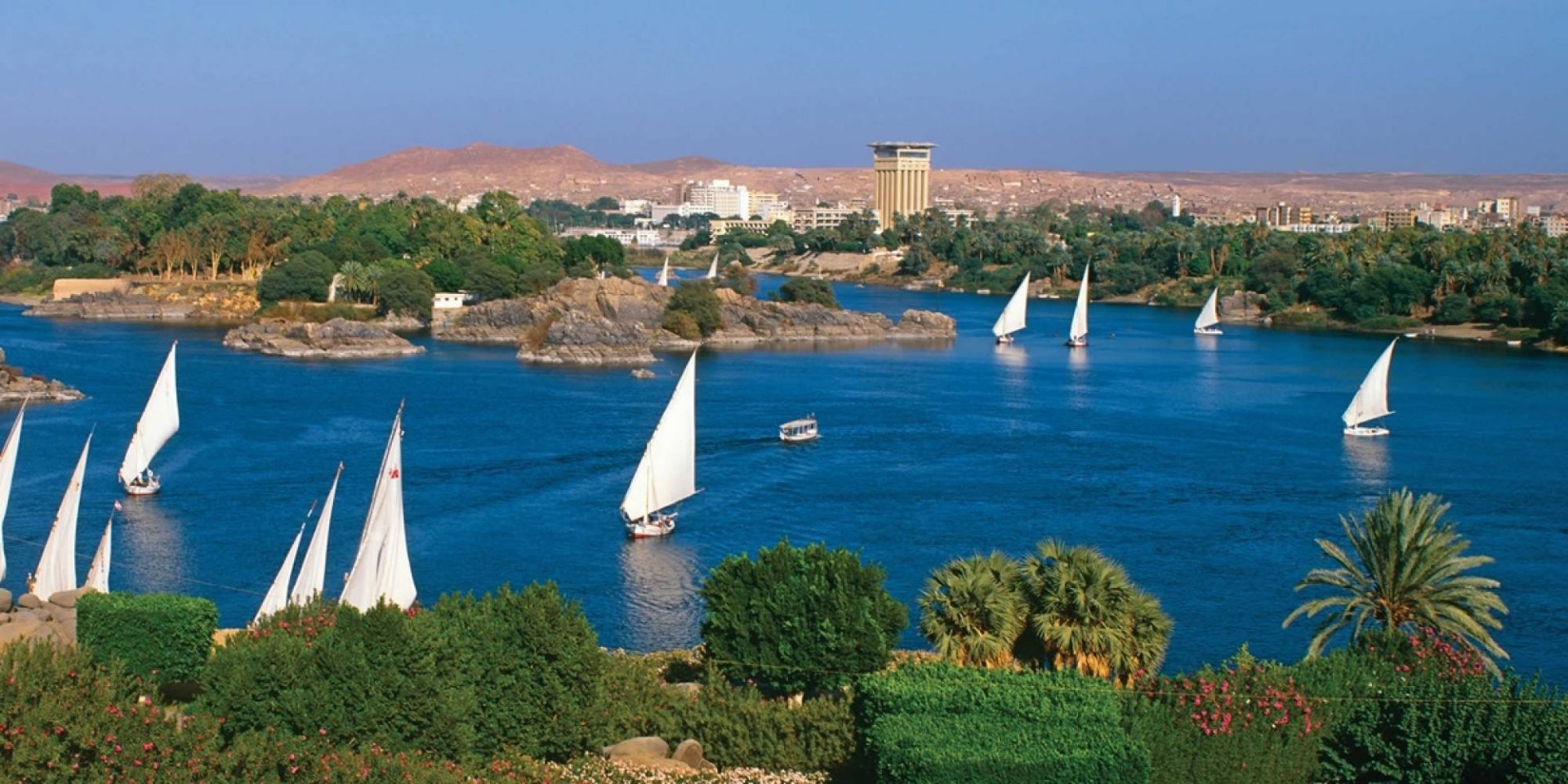
Aswan feels different from the rest of Egypt. The Nile narrows between granite boulders and golden dunes, white-sailed feluccas glide between islands and brightly painted villages climb the riverbanks. This is the gateway to Nubia, a land with its own languages, history and traditions. This guide introduces Aswan and Nubian culture, from ancient temples to the living communities that make southern Egypt so welcoming.
At a glance
- Ancient name: Swenet (Syene to the Greeks); Elephantine was called Abu
- Known for: the First Cataract, granite quarries, Philae Temple and Nubian villages
- Must-sees: Philae, the Nubian Museum, Elephantine, the Unfinished Obelisk, a felucca ride
- Nearby: Abu Simbel, Kom Ombo and Edfu
- Time needed: two days, or three with Abu Simbel
Egypt’s southern frontier
For the ancient Egyptians, Aswan marked the southern edge of Egypt proper. Here the First Cataract, a stretch of rapids and rocky islands, interrupted navigation on the Nile. The island of Elephantine, whose ancient name Abu meant both “elephant” and “ivory”, was a frontier town and trading post where goods from Africa – ivory, ebony, incense, gold – entered Egypt. On the west bank, the rock-cut Tombs of the Nobles at Qubbet el-Hawa belonged to its governors; one of them, Harkhuf, proudly recorded his expeditions into Africa in his tomb inscription.
Aswan also supplied the finest stone. Its red and grey granite was shipped all over Egypt for obelisks, statues and the King’s Chamber of the Great Pyramid. In the ancient quarries you can still see the Unfinished Obelisk, abandoned when it cracked; had it been finished, it would have been around 42 m tall, the largest ever attempted.
Philae: the last temple of Isis
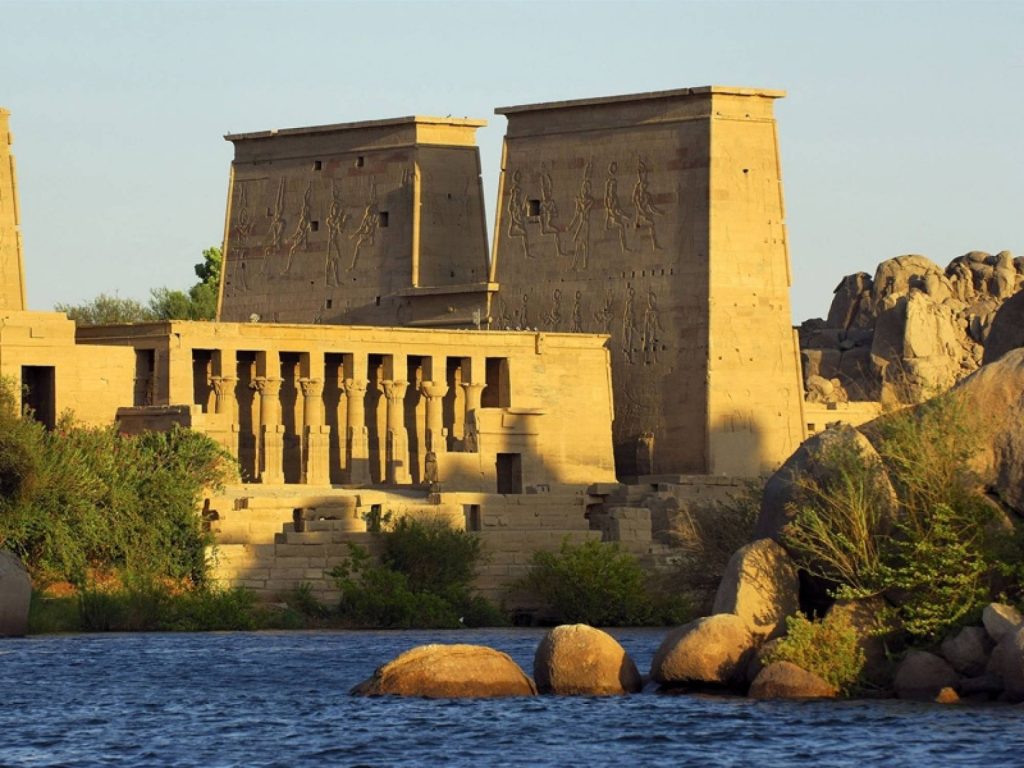
The temple of Isis at Philae, built mostly under the Ptolemies and the Romans, was one of the last strongholds of ancient Egyptian religion. The last known hieroglyphic inscription was carved here in AD 394, and the worship of Isis continued until the 6th century. When the old Aswan Dam left it partly flooded for much of each year, and the High Dam threatened it completely, the temple was dismantled and rebuilt on the higher island of Agilkia between 1977 and 1980. You reach it by small boat – one of the loveliest arrivals in Egypt.
Who are the Nubians?
Nubia stretches along the Nile from Aswan into Sudan. It was home to powerful African civilisations, above all the kingdom of Kush, with capitals at Kerma, Napata and Meroe. In the 8th century BC Kushite kings even conquered Egypt and ruled as the 25th Dynasty, the so-called “black pharaohs” such as Piye and Taharqa.
Today, Aswan and Nubian culture remain closely linked: modern Nubians speak their own languages, such as Nobiin and Kenzi, alongside Arabic, and have a strong tradition of music, architecture and hospitality. Their history in the 20th century was marked by loss: the building of the Aswan dams, and especially the High Dam completed in 1970, flooded their ancestral villages under Lake Nasser, and many communities were resettled. Preserving Nubian identity and memory remains important to them today.
Plan your visit
Explore Aswan, Philae and the Nubian villages with a local guide, or start your Nile cruise here.
The Nubian Museum
Opened in 1997 with support from UNESCO’s Nubia campaign, the Nubian Museum in Aswan tells the story of Nubia from prehistory to the present, with fine statues of the Kushite kings, objects rescued before the flooding, and displays on traditional Nubian life. Its garden and architecture are as appealing as its collection, and it is the best introduction to Aswan and Nubian culture.
Experiencing Nubian culture in Aswan: visiting a village
On the west bank north of the dam, villages such as Gharb Soheil welcome visitors with houses painted in bright blues, yellows and pinks, domed roofs and decorated doorways. You can drink tea in a family home, try Nubian food, see local crafts and, in some houses, baby crocodiles kept by the family. To visit responsibly:
- buy crafts directly from local makers;
- ask before photographing people;
- dress modestly and accept hospitality with thanks.
Aswan by felucca, and other experiences
A sunset sail by felucca around Elephantine and Kitchener’s Island, with its botanical garden, is the classic Aswan experience. You can also visit the High Dam, take a camel ride to the Monastery of St Simeon, enjoy tea on the terrace of the historic Old Cataract Hotel, and from Aswan make the early-morning journey to Abu Simbel. Most Nile cruises start or end in Aswan, with Kom Ombo and Edfu on the way to Luxor.
Frequently asked questions
What is Aswan famous for?
Its beautiful stretch of the Nile with islands and feluccas, the temple of Philae, the granite quarries and the Unfinished Obelisk, and its Nubian culture.
Can you visit a Nubian village in Aswan?
Yes. Villages such as Gharb Soheil on the west bank are easily reached by boat and welcome visitors.
How many days do I need in Aswan?
Two days cover the main sights. Add a day for Abu Simbel.
Who were the black pharaohs?
Kings from the Nubian kingdom of Kush who ruled Egypt as the 25th Dynasty in the 8th and 7th centuries BC, including Piye and Taharqa.
Sources & further reading
- UNESCO World Heritage – Nubian Monuments from Abu Simbel to Philae
- UNESCO – The Rescue of Nubian Monuments and Sites
- The British Museum – The Rosetta Stone – on hieroglyphs, demotic and the end of the ancient scripts
Written by the Deluxe Travel Egypt team and checked against the published sources above. Last updated October 2026.
Discover southern Egypt
Let us plan Aswan, Philae, Abu Simbel and the Nubian villages around your cruise or tour.
Send an enquiry WhatsApp +201000569259 WhatsApp +201221418581