
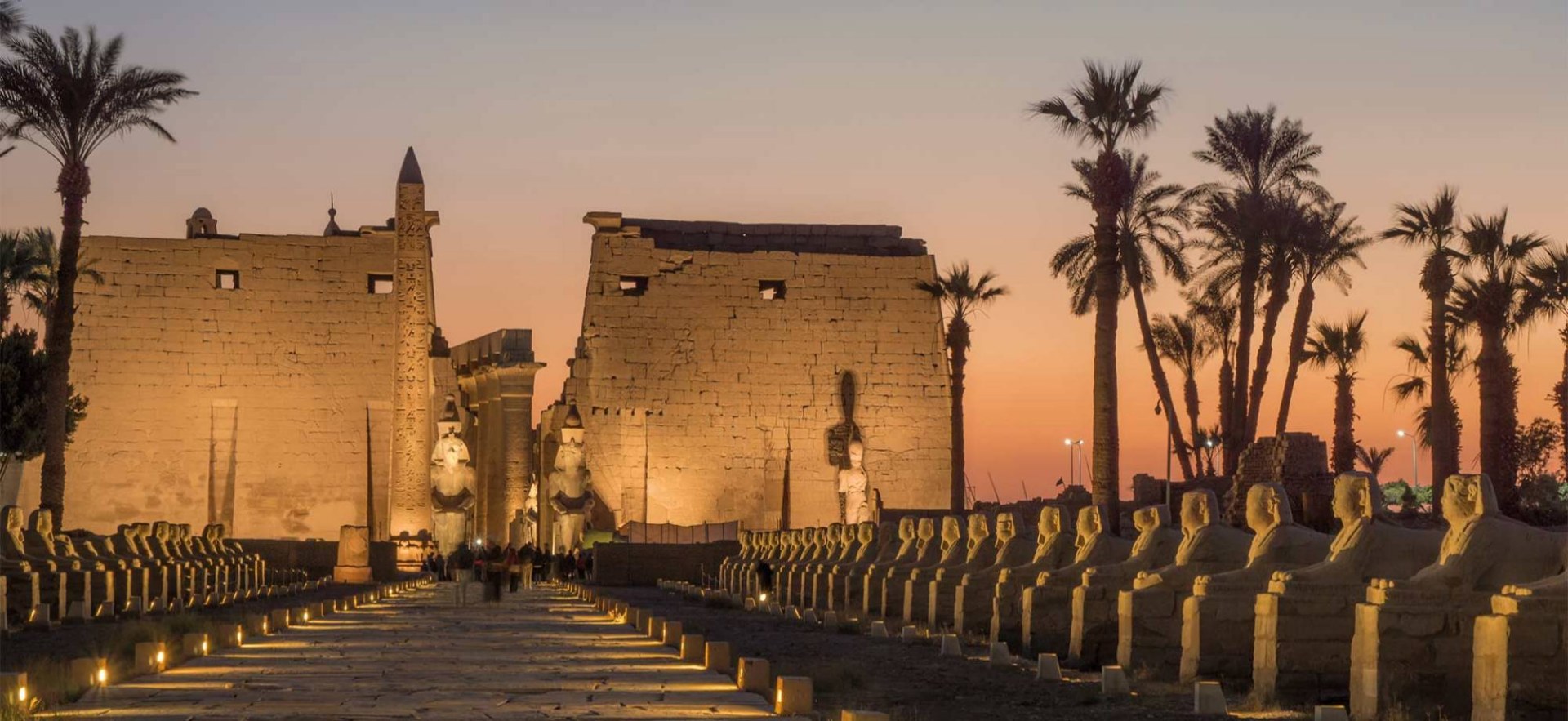
Luxor is often called the world’s greatest open-air museum, and for good reason. Here stood Thebes, the religious capital of Egypt at the height of its power. To understand it, you need one simple idea: the Nile divides Luxor into two halves with different purposes. The Luxor East and West Bank were, for the Egyptians, the land of the living and the land of the dead.
At a glance
- Ancient name: Waset; the Greeks called it Thebes
- Golden age: the New Kingdom, about 1550–1070 BC
- East Bank: Karnak, Luxor Temple, the Avenue of Sphinxes, Luxor Museum
- West Bank: Valley of the Kings, Hatshepsut’s temple, Medinet Habu, Colossi of Memnon
- UNESCO: “Ancient Thebes with its Necropolis”, listed in 1979
- Time needed: at least two full days, ideally three
Why two banks?
For the Egyptians, the sun’s daily journey shaped the world. It rose in the east, the direction of birth and renewal, and set in the west, where the dead began their journey through the underworld. So at Thebes, the living city and the great temples of the gods stood on the East Bank, while the tombs and the temples dedicated to the cult of dead kings lined the desert edge of the West Bank, beneath the pyramid-shaped peak of the Theban hills.
The East Bank: city of the living and the gods
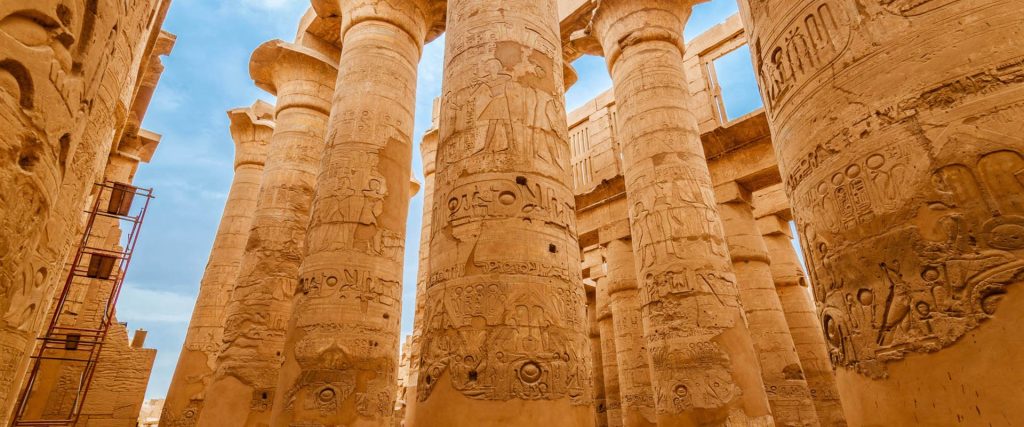
Karnak is one of the largest religious complexes ever built. Dedicated mainly to the god Amun-Ra, it was enlarged by pharaohs for some two thousand years. Its highlight is the Great Hypostyle Hall, a forest of 134 giant columns decorated by Seti I and Ramesses II. Look also for the obelisks of Hatshepsut and Thutmose I and the sacred lake.
Luxor Temple, about 3 km south, was built mainly by Amenhotep III and Ramesses II. Once a year, during the Opet Festival, the statue of Amun travelled from Karnak to Luxor Temple in a great procession. The route, the Avenue of Sphinxes, has been excavated and reopened, so you can now walk sections of it. Luxor Temple is especially beautiful when lit up at night.
Don’t miss the Luxor Museum, small but outstanding, and the Mummification Museum on the Corniche.
Plan your visit
Explore both banks with a licensed Egyptologist, by day trip from Cairo or as part of a Nile cruise.
The West Bank: city of the dead
In the Valley of the Kings, New Kingdom pharaohs were buried in deep, painted rock-cut tombs instead of pyramids. More than 60 tombs are known, including that of Tutankhamun. A standard ticket includes several tombs, with extra tickets for special ones such as Seti I and Tutankhamun. Nearby, the Valley of the Queens holds the tomb of Nefertari, often called the most beautiful in Egypt (special ticket).
Against the cliffs of Deir el-Bahari rises the terraced Temple of Hatshepsut, built for the female pharaoh who ruled as king in the 15th century BC. Other highlights include Medinet Habu, the vast temple of Ramesses III with brilliant colours, the Ramesseum of Ramesses II, the Colossi of Memnon, which once guarded the temple of Amenhotep III, the Tombs of the Nobles with scenes of daily life, and Deir el-Medina, the village of the craftsmen who built the royal tombs.
Crossing between the banks
You can cross the Nile by the road bridge south of the city, by the public ferry or by private motorboat or felucca. Many visitors begin a West Bank day with a hot air balloon flight at sunrise, floating over the temples, villages and sugarcane fields before landing in time for the tombs.
How to plan your days on the Luxor East and West Bank
- Day 1 – West Bank: balloon at sunrise (optional), Valley of the Kings, Temple of Hatshepsut, Colossi of Memnon. Start early: the West Bank is hot by midday.
- Day 2 – East Bank: Karnak in the morning, Luxor Museum after lunch and Luxor Temple at sunset and after dark.
- Day 3 – deeper: Medinet Habu, the Tombs of the Nobles, Deir el-Medina, the Ramesseum or the Valley of the Queens.
Short on time? A long single day, or a day trip from Cairo by air, can still cover the Valley of the Kings, Hatshepsut and Karnak. Most Nile cruises also include the main sites of the Luxor East and West Bank.
Frequently asked questions
Which is better, Luxor East Bank or West Bank?
Neither: they complement each other. The East Bank has the great temples of the gods, the West Bank the royal tombs and memorial temples. Try to see both.
How many days do I need in Luxor?
Two full days cover the highlights of both banks. Three days let you add Medinet Habu, the Tombs of the Nobles and other quieter sites.
Can I visit Luxor as a day trip from Cairo?
Yes, by early flight. You can see the Valley of the Kings, Hatshepsut’s temple and Karnak and fly back the same evening.
How many tombs can I see in the Valley of the Kings?
The standard ticket includes three tombs from those open that day. Some tombs, such as Tutankhamun and Seti I, require additional tickets.
Sources & further reading
- UNESCO World Heritage – Ancient Thebes with its Necropolis
- Theban Mapping Project – detailed plans of the Valley of the Kings and other Theban sites
- The Metropolitan Museum of Art – Hatshepsut: From Queen to Pharaoh (free to read online)
Written by the Deluxe Travel Egypt team and checked against the published sources above. Last updated October 2026.
Discover ancient Thebes
From the balloon at sunrise to Luxor Temple by night, we plan private Luxor days around you.
Send an enquiry WhatsApp +201000569259 WhatsApp +201221418581