
Walking through medieval Cairo, your guide will keep mentioning three names: Fatimid, Ayyubid and Mamluk. These were the dynasties that built the city between the 10th and the early 16th centuries, and each left a distinctive mark. Once you know the difference, the streets of Fatimid, Ayyubid and Mamluk Cairo become a timeline you can read in stone.
At a glance
- Fatimids: 969–1171 – founded al-Qahira; al-Azhar, al-Aqmar, the great stone gates
- Ayyubids: 1171–1250 – Salah al-Din, the Citadel, the first madrasas
- Mamluks: 1250–1517 – Qalawun, Sultan Hassan, Qaytbay; Cairo’s golden age of building
- After them: Ottoman rule from 1517
- Best street: al-Muizz Street, where all three periods stand side by side
The Fatimids (969–1171): founders of Cairo
The Fatimids were a Shi’a Ismaili dynasty from North Africa who claimed descent from the Prophet’s daughter Fatima. In 969 their general Jawhar conquered Egypt and laid out a walled royal city north of Fustat for the caliph al-Muizz. They called it al-Qahira, “the Victorious”. Between two great palaces ran the main street that still bears the caliph’s name.
How to recognise Fatimid buildings: keel-shaped arches, carved stucco and stone, and inscriptions in angular Kufic script. Where to see them: al-Azhar Mosque (970–972), the Mosque of al-Hakim, the small but exquisite Mosque of al-Aqmar (1125) with the first decorated stone façade in Cairo, and the monumental stone gates Bab al-Futuh, Bab al-Nasr and Bab Zuweila, built in 1087–1092 by the vizier Badr al-Jamali.
The Ayyubids (1171–1250): fortress and faith
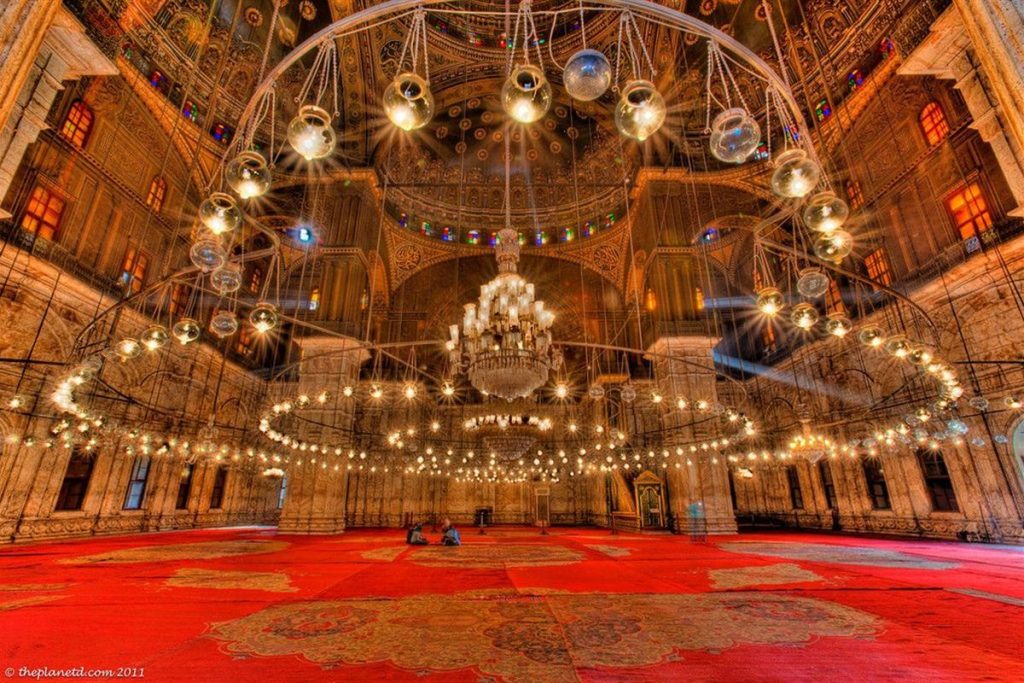
In 1171 Salah al-Din (Saladin), a Kurdish commander, ended the Fatimid caliphate and restored Sunni Islam in Egypt. His dynasty, the Ayyubids, spent much of its energy on war with the Crusaders, and its buildings reflect that. Salah al-Din began the Citadel in 1176 and extended the walls to enclose both Cairo and Fustat.
In addition, the Ayyubids introduced the madrasa to Egypt – a college for teaching Sunni law – as part of their religious programme. How to recognise them: solid military stonework, and more restrained decoration. Where to see them: the Citadel walls, stretches of the Ayyubid wall beside Al-Azhar Park, the Madrasa of al-Salih Najm al-Din Ayyub on al-Muizz Street, and the great wooden-domed mausoleum of Imam al-Shafi’i in the Southern Cemetery.
Plan your visit
Our guides lead walking routes that take you through all three periods in a single day.
The Mamluks (1250–1517): Cairo’s golden age
In contrast, the Mamluks were soldiers originally brought to Egypt as enslaved boys, trained in arms and freed. In 1250 they seized power for themselves. They defeated the Mongols at Ain Jalut in 1260, drove the last Crusaders from the Levant and made Cairo the greatest city of the Islamic world. They are usually divided into two periods: the Bahri Mamluks (1250–1382), mostly of Turkic origin, and the Burji or Circassian Mamluks (1382–1517).
Above all, Mamluk sultans and amirs competed to build grand funerary complexes combining a mosque or madrasa, a mausoleum, a public water fountain (sabil) and a Qur’an school (kuttab), placed to dominate the street. How to recognise them: tall minarets in several stages, carved stone domes, striped red-and-white masonry (ablaq), portals with stalactite-like muqarnas vaults and rich marble inlay. Where to see them: the complex of Qalawun (1284–85), the Mosque-Madrasa of Sultan Hassan (1356–1363), the complex of Barquq, the funerary complex of Qaytbay in the Northern Cemetery (1472–74) with its famous carved dome, and the complex of al-Ghuri.
Medieval Cairo: a quick way to tell the styles apart
- Fatimid: keel arches, Kufic inscriptions, massive gates, relatively low profile.
- Ayyubid: fortifications, the first madrasas, plain and solid.
- Mamluk: soaring minarets, carved stone domes, striped masonry, grand street façades with sabils.
- Ottoman (after 1517): slender pencil-shaped minarets and large central domes, as at the Mosque of Muhammad Ali, plus elegant houses with wooden mashrabiya screens.
Where to see medieval Cairo’s three styles in a day
Start at Bab al-Futuh and walk south along al-Muizz Street: Fatimid gates, al-Aqmar, the Ayyubid madrasa of al-Salih and the Mamluk complexes of Qalawun and Barquq stand within a few hundred metres. Cross to al-Azhar, continue through Darb al-Ahmar to Bab Zuweila, and finish at Sultan Hassan and the Citadel. In one day you will have walked through 550 years of medieval Cairo.
Frequently asked questions
Who founded Cairo?
The Fatimid dynasty founded al-Qahira in 969 AD, though earlier settlements such as Fustat (641–642) lie within today’s city.
Who were the Mamluks?
Soldiers originally brought to Egypt as enslaved youths and trained in the army, who took power in 1250 and ruled Egypt and Syria until the Ottoman conquest of 1517.
Who built the Cairo Citadel?
Salah al-Din (Saladin) began it in 1176. Later Mamluk and Ottoman rulers added to it, including the Mosque of Muhammad Ali in the 19th century.
What is the best street for medieval architecture?
Al-Muizz Street, the main street of Fatimid Cairo, has outstanding Fatimid, Ayyubid and Mamluk monuments within a short walk.
Sources & further reading
- UNESCO World Heritage – Historic Cairo
- Archnet – Masjid al-Sultan Hasan
- Archnet – Cairo: Renewing the Historic City (free publication)
Written by the Deluxe Travel Egypt team and checked against the published sources above. Last updated October 2026.
Read Cairo’s history in its stones
A private walking tour with a local guide is the best way to see medieval Cairo.
Send an enquiry WhatsApp +201000569259 WhatsApp +201221418581