
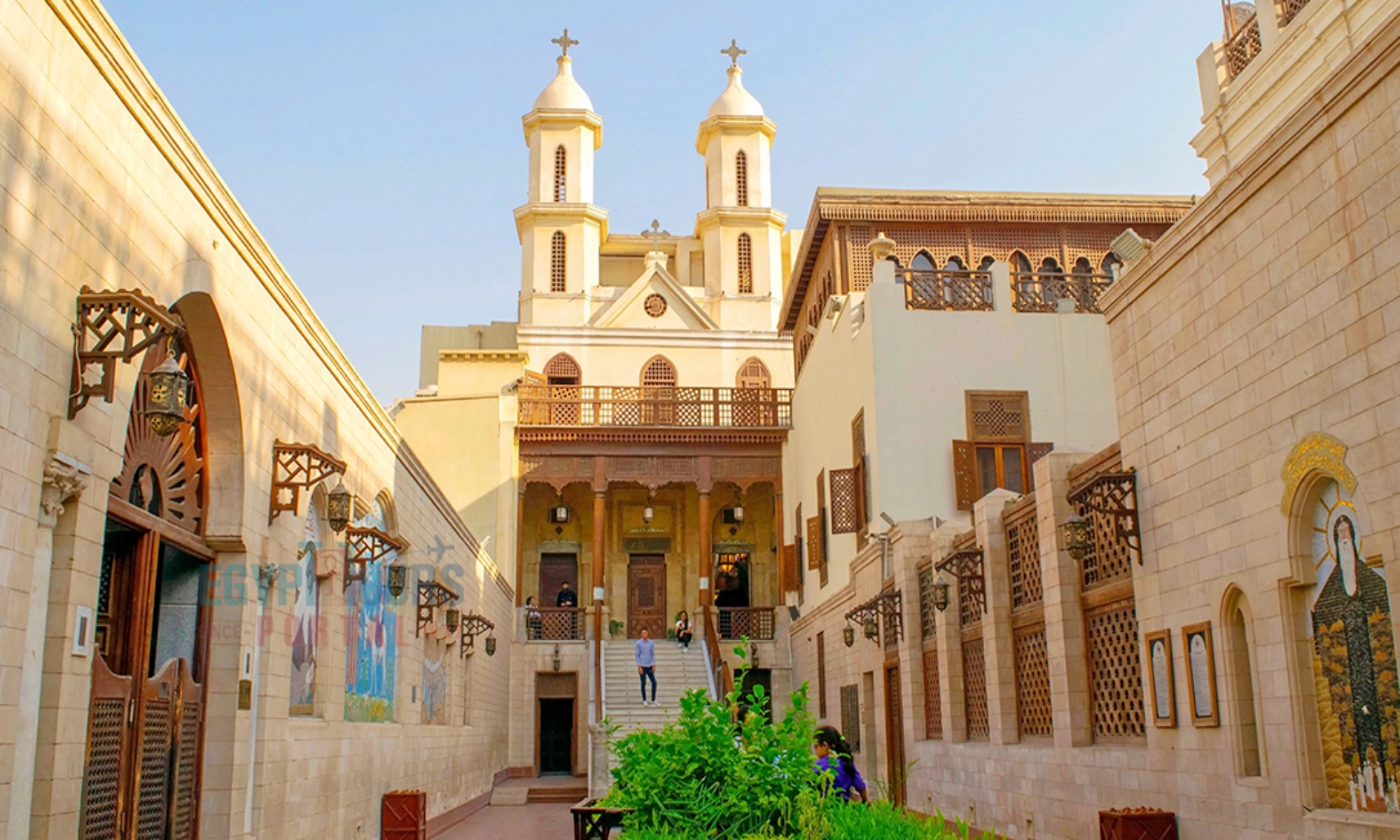
In a small walled quarter in the south of the city, Roman towers, ancient churches, a historic synagogue and Egypt’s first mosque stand within a few minutes’ walk of each other. Coptic Cairo, part of the area known as Old Cairo, is one of the best places anywhere to understand how Christianity, Judaism and Islam shaped Egypt. This guide explains what you will see and the history behind it.
At a glance
- Location: Old Cairo (Masr al-Qadima), around Mar Girgis metro station
- Oldest structure: the Roman Fortress of Babylon, around AD 300
- Highlights: Hanging Church, Abu Serga, Ben Ezra Synagogue, Coptic Museum
- Nearby: Mosque of Amr ibn al-As and the National Museum of Egyptian Civilization
- Time needed: 2–3 hours; easily combined with Islamic Cairo or the pyramids
Who are the Copts?
The word “Copt” comes, through Arabic, from the Greek word for Egyptian. Today it refers to Egypt’s Christians, most of whom belong to the Coptic Orthodox Church. According to tradition, Christianity was brought to Alexandria by Saint Mark the Evangelist in the 1st century AD. Egypt became one of the great centres of early Christianity: Christian monasticism was born in its deserts with figures such as Saint Anthony, and Alexandria produced some of the most influential theologians of the early Church.
After the Council of Chalcedon in 451 the Egyptian Church separated from the churches of Rome and Constantinople over the nature of Christ. The Coptic language, the last stage of ancient Egyptian written in Greek letters, survives today in the Church’s liturgy.
The Fortress of Babylon
Coptic Cairo grew up inside a Roman fortress known as Babylon. It guarded an important crossing of the Nile and the entrance to a canal that linked the river with the Red Sea. The fortress in its present form is usually dated to around AD 300, in the reign of Diocletian. Two massive round towers and stretches of wall still stand beside the Coptic Museum, some metres below today’s street level, because the ground has risen over the centuries.
Later, in 641, the Arab army led by Amr ibn al-As took Babylon after a siege, and founded the new city of Fustat beside it – the first Islamic capital of Egypt.
The Hanging Church
The Church of the Virgin Mary, known as al-Mu’allaqa or the Hanging Church, is built on top of the southern gatehouse of the fortress, so that its nave seems to be suspended above a passage. A church existed here by the 7th century, and the present building is the result of several later rebuildings. For a time in the Middle Ages it served as the seat of the Coptic Patriarch.
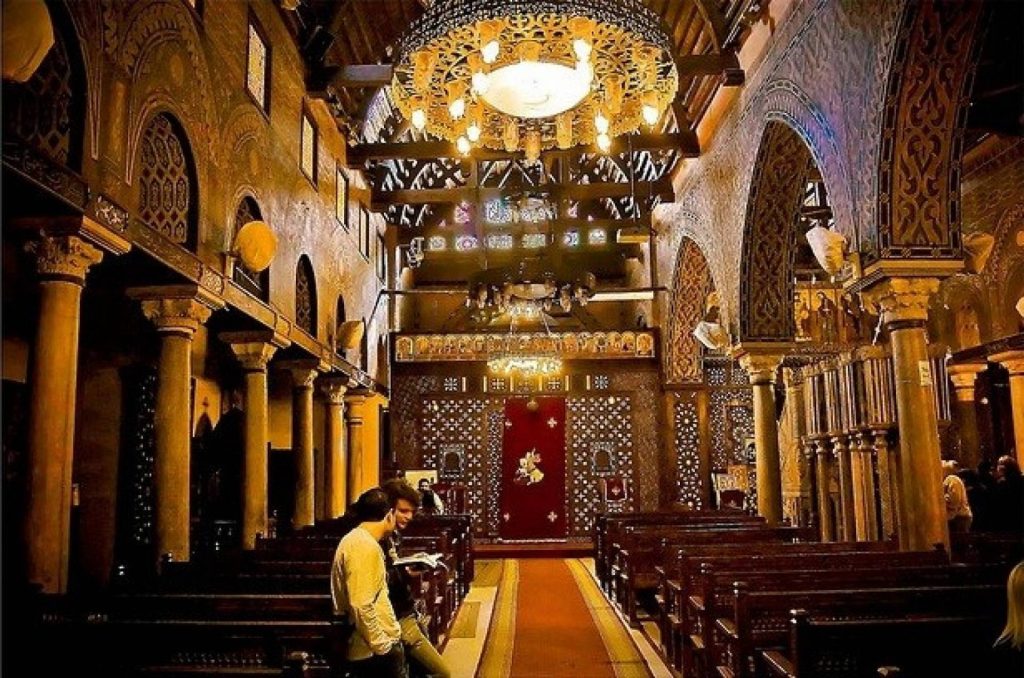
Inside, look in particular for the wooden barrel-vaulted roof that recalls Noah’s Ark, the marble pulpit supported by slender columns, and the screens of cedar inlaid with ivory and ebony in front of the sanctuaries, hung with icons.
Plan your visit
Explore Coptic Cairo on foot with a licensed guide, alone or combined with the pyramids or Islamic Cairo.
Abu Serga and the Holy Family
The Church of Saints Sergius and Bacchus, known as Abu Serga, is one of the oldest churches in Cairo. According to Coptic tradition, its crypt marks a place where the Holy Family rested during their flight into Egypt, an episode in the Gospel of Matthew. Egypt honours a whole route of places associated with the Holy Family, from Sinai to Upper Egypt, and Abu Serga is one of its most visited stations. The crypt is sometimes closed when the Nile groundwater rises.
The Ben Ezra Synagogue and the Cairo Genizah
Likewise, steps from the churches stands the Ben Ezra Synagogue, restored and open to visitors. For about a thousand years, the Jewish community of Fustat placed worn-out books and documents in a storeroom, or genizah, of the synagogue rather than destroying anything that might contain the name of God. In 1896–97 the scholar Solomon Schechter brought a large part of this hoard to Cambridge University Library.
The Cairo Genizah documents – letters, contracts, poetry, prayers and accounts – are one of the richest sources for life in the medieval Mediterranean, and they show Jews, Christians and Muslims doing business and living side by side.
The Coptic Museum and other sites in Coptic Cairo
Founded in 1910, the Coptic Museum holds one of the world’s largest collections of Coptic art: stone carvings, textiles, icons, manuscripts and wooden screens, including material from early monasteries. Nearby you can also visit the Greek Orthodox Church of St George, built on one of the Roman towers, the Mosque of Amr ibn al-As, founded in 641–642, and the National Museum of Egyptian Civilization, home of the royal mummies.
Frequently asked questions
Why is it called the Hanging Church?
Because it was built on top of the gatehouse of the Roman Fortress of Babylon, so its nave appears to hang above the passage below.
Is Coptic Cairo safe to visit?
Yes. The area is well protected and visited daily by tourists and pilgrims. Dress modestly, as these are active places of worship.
Can I visit the Ben Ezra Synagogue?
Yes, the synagogue is open to visitors as a historic site, though photography inside may be restricted.
How long do I need in Coptic Cairo?
Two to three hours is enough for the main churches, the synagogue and the Coptic Museum.
Sources & further reading
- UNESCO World Heritage – Historic Cairo
- Cambridge Digital Library – The Cairo Genizah collection
- Smithsonian Magazine – How the Rosetta Stone was deciphered – on the role of Coptic in reading hieroglyphs
Written by the Deluxe Travel Egypt team and checked against the published sources above. Last updated October 2026.
Walk through 2,000 years of faith
Our guides bring the churches, synagogue and Roman towers of Old Cairo to life.
Send an enquiry WhatsApp +201000569259 WhatsApp +201221418581