
Most of what survives from ancient Egypt was made for tombs and temples, so it is easy to imagine the Egyptians thought only about death. In reality they loved life, and they left plenty of evidence of it. These five artefacts, each based on real objects you can see in museums or on site, open a window onto ancient Egyptian daily life: food, work, family, learning and leisure.
At a glance
- 1: The tomb models of Meketre – food production in miniature
- 2: A workmen’s absence register from Deir el-Medina
- 3: The Rhind Mathematical Papyrus – school maths
- 4: Tutankhamun’s senet games – leisure and belief
- 5: The painted tomb of Sennedjem – farming and family
- Where to see them: Cairo, Luxor and the British Museum in London
1. The models of Meketre: a household in miniature
In 1920 archaeologists working for the Metropolitan Museum of Art found a small hidden chamber in the tomb of Meketre, a high official of around 1980 BC, at Deir el-Bahari in Luxor. It held two dozen painted wooden models, astonishingly well preserved. They show a granary with scribes recording the grain, a bakery and brewery, a butcher’s shop, weavers at their looms, a carpenter’s workshop, cattle being counted before their owner, and a fleet of boats.
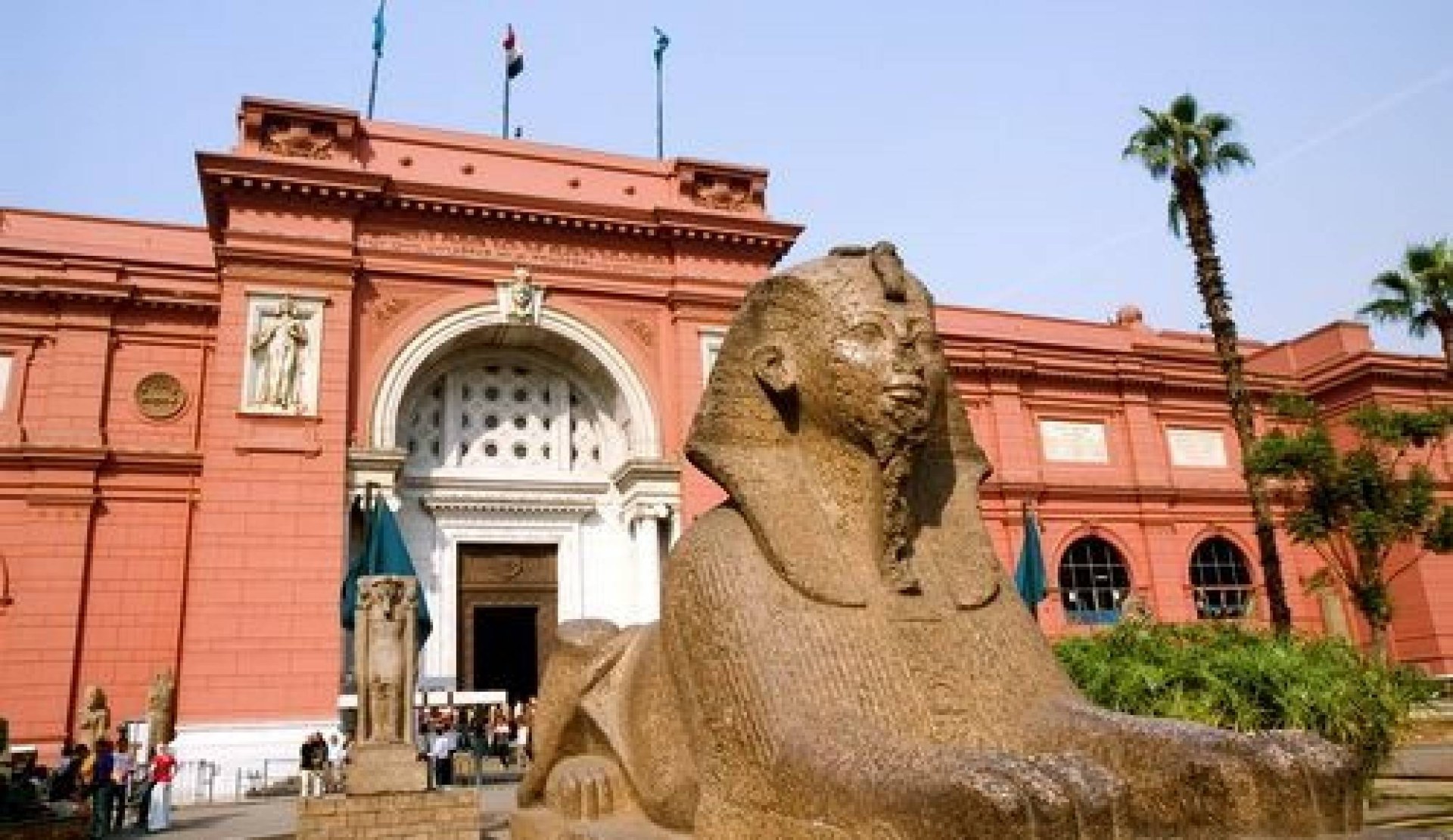
Of course, the models were meant to provide for Meketre forever, but for us they are snapshots of ancient Egyptian daily life on a great estate. The collection was divided between Cairo and New York; the Cairo half can be seen in the Egyptian museums in Cairo.
2. A sick-leave register from the tomb builders’ village
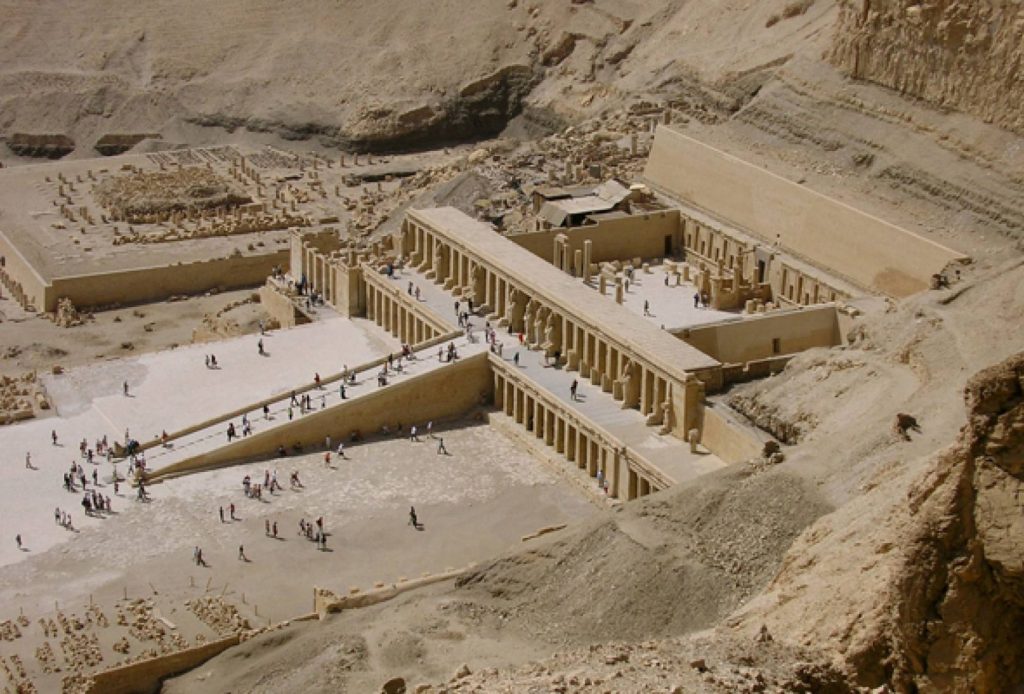
The craftsmen who cut and decorated the royal tombs in the Valley of the Kings lived in a walled village now called Deir el-Medina. They wrote constantly on flakes of limestone and pottery called ostraca. One remarkable example, now in the British Museum, is a register from Year 40 of Ramesses II (around 1250 BC) recording why forty workmen were absent over 280 days.
The reasons sound very familiar: ill, his daughter was bleeding, making an offering to the god, libating for his father, with his boss – and even drinking with Khonsu. Thousands of other ostraca from the village record loans, laundry lists, love poems, legal disputes and letters. No other place in Egypt lets us hear ordinary people so clearly.
3. The Rhind Mathematical Papyrus: homework, 1550 BC
Meanwhile, scribes were the managers of ancient Egypt, and they needed maths. The Rhind Mathematical Papyrus, copied by a scribe named Ahmose around 1550 BC from an older text, is essentially a teaching manual. It contains around 80 problems: dividing loaves among workers, calculating the volume of granaries, finding the area of fields and the slope of a pyramid. It shows how the Egyptians handled fractions and practical geometry, the skills behind every ration list, field survey and building project. The papyrus is in the British Museum.
Plan your visit
See daily-life treasures in Cairo and visit the craftsmen’s village and tombs at Deir el-Medina in Luxor.
4. Senet: the board game that went to the afterlife
Leisure mattered too: board games were hugely popular. The most famous is senet, played on a board of 30 squares with throwing sticks instead of dice. Tutankhamun’s tomb contained several game boxes, including a fine one of ebony and ivory with senet on one side and another game on the other. Tomb paintings show couples playing together.
Over time senet also took on religious meaning. Passing through its squares came to symbolise the journey of the soul through the underworld, and a spell in the Book of the Dead mentions playing senet in the afterlife. Leisure and belief were never far apart in Egypt. Tutankhamun’s games are on display at the Grand Egyptian Museum.
5. The tomb of Sennedjem: an artisan’s vision of paradise
Finally, Sennedjem was one of the Deir el-Medina craftsmen, living in the 19th Dynasty. His small burial chamber, near the village, is one of the most colourful tombs in Egypt and can still be visited. Its paintings show Sennedjem and his wife Iyneferti ploughing, harvesting wheat and picking flax in the Field of Reeds, the Egyptian paradise. The scenes are idealised, but every detail – the plough, the sickle, the linen clothes, the palm trees – comes from the world he knew. For many Egyptians, the perfect afterlife was simply a better version of daily life on the banks of the Nile.
What these objects tell us about ancient Egyptian daily life
Taken together, these objects reveal ancient Egyptian daily life: a society organised around agriculture and the river, run by literate scribes, built by skilled and sometimes outspoken craftsmen, and full of family ties, festivals and games. They remind us that the people who built the pyramids and temples were real individuals who fell ill, cared for their children, argued with their bosses and enjoyed a drink with friends.
Frequently asked questions
What did ordinary ancient Egyptians eat?
Bread and beer were the staples, along with onions, lentils, beans, fish, fruit such as dates and figs, and meat on special occasions.
Can you visit Deir el-Medina?
Yes. The workmen’s village and several decorated tombs, including that of Sennedjem when open, can be visited on the West Bank of Luxor.
Did ancient Egyptians play games?
Yes. Board games such as senet and mehen were very popular, and boxes for senet were placed in tombs, including Tutankhamun’s.
Where are the models of Meketre?
They were divided between the Egyptian museums in Cairo and the Metropolitan Museum of Art in New York.
Sources & further reading
- The British Museum – Ostracon with a workmen’s absence register, Year 40 of Ramesses II (EA 5634)
- The British Museum – The Rhind Mathematical Papyrus (EA 10057)
- The Metropolitan Museum of Art – Hatshepsut: From Queen to Pharaoh (free to read online) – with chapters on life and art in Thebes
- Theban Mapping Project – plans of the West Bank of Luxor
Written by the Deluxe Travel Egypt team and checked against the published sources above. Last updated October 2026.
Meet the real ancient Egyptians
Our Egyptologist guides bring daily life in ancient Egypt to life in the museums of Cairo and the tombs of Luxor.
Send an enquiry WhatsApp +201000569259 WhatsApp +201221418581