
Ask an Egyptologist what the pyramids were built for and you will hear a simple answer: they were royal tombs. That is true, but it is only the beginning. A pyramid was the centrepiece of a vast religious complex, a statement about the nature of kingship, an economic institution that ran for generations and a giant symbol of the sun and of creation. Understanding these layers is the key to understanding the pyramids themselves.
At a glance
- Main function: tomb of a king, at the centre of a temple complex
- Religious meaning: primeval mound of creation, rays of the sun and a route to the stars
- Political meaning: proof of the king’s divine role and the state’s power
- Economic role: supported by estates, pyramid towns and priests for generations
- Ancient names: Khufu’s pyramid was called Akhet Khufu, “Horizon of Khufu”
What were the pyramids built for? First, royal tombs
The evidence that pyramids were tombs is overwhelming. Each contains a burial chamber, and many still hold the king’s stone sarcophagus – Khufu’s granite sarcophagus is still in the King’s Chamber of the Great Pyramid. Pyramids stand inside cemeteries, surrounded by the smaller pyramids of queens and the tombs of princes and officials who wanted to be buried close to their king. Later pyramids, from Unas onwards, are inscribed with the Pyramid Texts, spells written precisely to help the dead king in the afterlife.
Why, then, have no kings’ mummies been found inside the Giza pyramids? Because robbers plundered them in antiquity, probably within a few centuries of their completion. Their sheer size made them targets. This is one reason later kings of the New Kingdom chose hidden rock-cut tombs in the Valley of the Kings instead.
Part of a complex, not a lonely monument
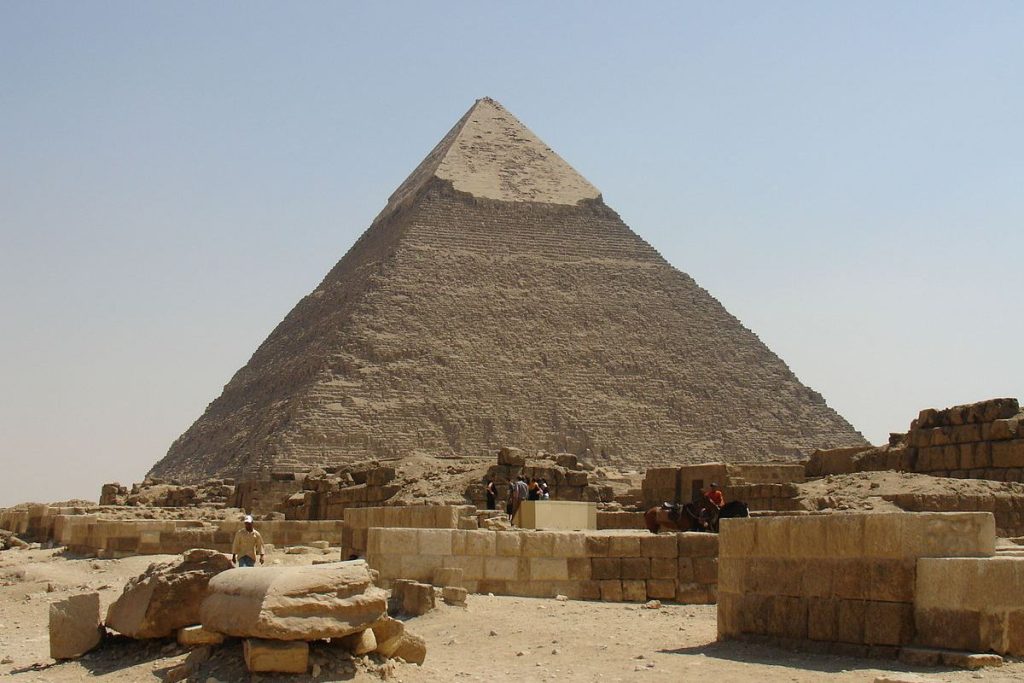
Today the pyramids rise from bare desert, but each was originally the heart of a complex. A valley temple stood at the edge of the floodplain, where the royal body may have been received. A covered causeway led up to the mortuary temple against the pyramid’s east face, where priests made daily offerings to the king’s spirit. Boat pits held full-size ships, such as the cedar boat of Khufu now in the Grand Egyptian Museum.
These temples were meant to operate forever. Royal decrees and papyri, such as the archive from the temple of King Neferirkare at Abusir, show priests on duty rotas, inventories of temple equipment and deliveries of food from royal estates long after the king had died.
Plan your visit
Our Egyptologist guides explain the full pyramid complex on site: valley temple, causeway, mortuary temple and boat pits.
The pyramid and the power of the king
For the Egyptians the king was the link between the gods and humanity, responsible for maintaining maat: order, justice and the right functioning of the world. A king who could organise the quarrying, transport and setting of millions of tonnes of stone was visibly fulfilling that role. The pyramid project also bound the country together. Workers, food, timber and tools came from all over Egypt, and the archaeology of the workers’ town at Giza shows a state-run system of rations and organisation. In this sense the pyramids built the Egyptian state as much as the state built the pyramids.
Symbols of creation, the sun and the stars
Religion is the third answer to what the pyramids were built for, because the pyramid shape had deep religious meaning. In Egyptian creation myths the world began when a mound of earth rose from the primeval waters. At Heliopolis this mound was linked to the benben, a sacred stone associated with the sun god Re. A pyramid recalled both the primeval mound and the sun’s rays streaming down to earth, a stairway along which the king could ascend.
The stars mattered too. The entrances of the Old Kingdom pyramids face north, towards the circumpolar stars that never set, which the Egyptians called “the imperishable ones”. The Pyramid Texts describe the king joining them. Even the pyramids’ names express these ideas: Khufu’s was Akhet Khufu, “Horizon of Khufu”, the place where the sun rises and sets.
What the pyramids were not
Over the centuries, many alternative ideas have been proposed. Medieval travellers called the pyramids “Joseph’s granaries”, though they are almost solid stone with only small chambers. Modern theories about power plants, lost civilisations or outside help ignore the large body of evidence: quarries with unfinished blocks, tools, workers’ graffiti, the town and cemetery of the builders and the papyri of Merer describing stone deliveries for the Great Pyramid. The Egyptians built the pyramids themselves. So, what were the pyramids built for? For their kings and their gods.
Frequently asked questions
Were the pyramids really tombs?
Yes. They contain burial chambers and sarcophagi, stand in cemeteries and, from the late 5th Dynasty, carry funerary spells. Their contents were robbed in antiquity.
Why is the pyramid shape so important?
It recalled the primeval mound of creation and the rays of the sun, and was linked to the sacred benben stone of the sun god at Heliopolis.
Has a mummy ever been found in a pyramid?
Remains have been found in some pyramids, but none of the Giza kings’ mummies survives. The tombs were plundered long before modern times.
Who was buried around the pyramids?
Queens, princes and princesses, and high officials, in smaller pyramids and in mastaba tombs laid out in streets around the royal pyramid.
Sources & further reading
- UNESCO World Heritage – Memphis and its Necropolis
- The Metropolitan Museum of Art – Egyptian Art in the Age of the Pyramids (free to read online)
- AERA – The Lost City of the Pyramid Builders
- Digital Giza (Harvard University)
Written by the Deluxe Travel Egypt team and checked against the published sources above. Last updated October 2026.
Understand the pyramids on site
A private tour with a licensed Egyptologist turns the pyramids from postcards into a living story.
Send an enquiry WhatsApp +201000569259 WhatsApp +201221418581